Showing posts with label Shakespeare. Show all posts

Thursday, June 30, 2016

"Why, then, the world's mine oyster!"

TCM went Shakespeare-wild last night on TV. They showed Macbeth, Hamlet, Romeo and Juliet, and the 1935 A Midsummer Night's Dream. I watched a little bit of Macbeth, but don't really enjoy looking at Orson Wells. I watched all of Hamlet.


I take back most of the negative things I ever thought about Laurence Olivier. His Hamlet is one of the best movies I've ever seen in my life. I had never seen this one before. L.O. didn't go into his usual histrionics until late in the film. Shortly into Romeo and Juliet, I went to sleep in my chair, so I got up and went to bed.

Note: The characters Francisco and Horatio, and old Polonius, reminded me of Edward de Vere's two cousins Francis and Horace de Vere, and Lord Burghley of whom Polonius in the play is a word-for-word-for-word copy.

Sunday, October 26, 2014

Shakespeare's Dad


Thomas Seymour, 2nd Earl Arundel

When Henry VIII died in January 1547, he left a widow who still had her head. Her name was Katherine Parr.

Henry's favorite wife had been Jane Seymour, who had died after bearing the future King Edward VI.

Two of Jane's brothers, Edward and Thomas, survived Henry. Near his deathbed, Henry appointed Edward Seymour, Duke of Somerset/Earl of Hertford , as Protector of the young prince.

Soon after Henry VIII died, his widow Katherine married Thomas Seymour, Duke of Something/second Earl Arundel, and Henry's young daughter Elizabeth was sent to live with them, at which time Elizabeth, born in September 1533, was 13 years old.

After a couple of years, Elizabeth was sent to live in the country (Hatfield), ostensibly sick, but according to rumor pregnant by Thomas.

The rumors circulating around London prompted the Protector to send letters repeatedly to Elizabeth questioning the matter. Finally, Elizabeth wrote back entreating him to let her come to London to show folks that she wasn't pregnant.

While Elizabeth was in the country, Thomas had tried to abduct her, was arrested and eventually beheaded.

Down to here is documented history. The rest is conjecture by Charlton Ogburn and other historians, and me.

The sum of the conjecture/assumptions is that at age 16 or 17, Elizabeth wasn't pregnant any more because the child had been born. She took him to a kinsman, the old Earl of Oxford at his castle Hedingham in Essex, who raised him as his own son. They named him Edward after his uncle Seymour and after Elizabeth's brother Edward, the young Prince.

At that time the Earl of Oxford's wife had in fact died. Sometime around 1548 to 1550, he in fact married a young widow, Margery Golding, sister of the scholar/author/translator Arthur Golding. Margery was reputed to be the mother of the child, who over the years was in fact educated by Arthur Golding and other tutors, and at Oxford and Cambridge. When he was 12 years old, his "father," the 16th Earl of Oxford, died, and young Edward was sent to London, where Elizabeth made him the ward of her secretary, William Cecil, whom she appointed Baron Burleigh. Through the sixteenth earl, Edward was hereditarily 17th Earl of Oxford and several other titles, as well as Lord Great Chamberlain of England. Over the remaining lifetime of Lord Burleigh, almost all of Edward's numerous estates, forests, castles and property were in fact transferred to, or sold by, Lord Burleigh. After Burleigh died, Elizabeth granted Edward 1,000 pounds a year to live on.

Many years later, Edward's second wife, Elizabeth Trentham, bought back his "ancestral" castle Hedingham in Essex before Edward died (fact).

What all of this has to do with "Shakespeare" has been researched and written about for more than a hundred years by the Ogburns, members of the American Bar Association, and many other scholars.

Sunday, July 28, 2013

Sonnet 55


Not marble, nor the gilded monuments
Of princes, shall outlive this powerful rhyme;
But you shall shine more bright in these contents
Than unswept stone besmear'd with sluttish time.
When wasteful war shall statues overturn,
And broils root out the work of masonry,
Nor Mars his sword nor war's quick fire shall burn
The living record of your memory.
'Gainst death and all-oblivious enmity
Shall you pace forth; your praise shall still find room
Even in the eyes of all posterity
That wear this world out to the ending doom.
So, till the judgment that yourself arise,
You live in this, and dwell in lovers' eyes. 
 
*

We don't know whom he was writing to or about. I like to think it was himself; it's truer of him than of any of his contemporaries.

Friday, July 26, 2013

Oxford & Byron, by Stephanie Hopkins Hughes

This book points out the incredible similarities in the lives of Lord Byron and of Shakespeare (Edward De Vere, 17th Earl of Oxford). And the final, fateful difference that affected posterity's assessment of these two prodigies of English literature.

The difference was that Byron suffered (literally) early fame and an early death. While Oxford's great works were denied any sort of fame in connection with himself, throughout a comparatively long life of hiding his identity and perfecting his works.

"Until Thomas Looney unearthed Oxford, nothing at all was known about the author of Shakespeare, while Byron was one of the most highly publicized writers who ever lived." And, "Oxford and Byron were Gullivers in a land of Lilliputians." -- Hughes

Of Oxford's protagonist Biron, in Love's Labour's Lost, it was said, "Biron they call him, but a merrier man/ Within the limit of becoming mirth,/ I never spent an hour's talk withal./ His eye begets occasion for his wit."

Byron's family name was originally Biron, of Norman French origin. His first mistress was the wife of Lord Harley, a late earl of Oxford. Byron's last mistress wrote of him, "When he laughed the very air around him appeared to laugh."

Hughes' small book is filled with paragraph after paragraph--hundreds--of coincidences and similarities in the lives of these two poets and playwrights.

It's almost as if Byron's life was a morality lesson for Oxford, showing what might have been Shakespeare's reputation, had his early, unperfected writing brought him fame.

Edward De Vere, 17th Earl of Oxford, 1550-1604
George Gordon, Lord Byron, 1788-1824

Monday, July 22, 2013

Beautiful song from Shakespeare

O mistress mine, where are you roaming?
Oh, stay and hear--your true love's coming
that can sing both high and low!

Trip no further, pretty sweeting--
Journeys end in lovers' meeting,
every wise man's son doth know!

Saturday, January 26, 2013

FAVORITES

My favorite writers:

William Shakespeare, poet and playwright
Charles Dickens, novelist
Mark Twain, novelist, memoirist and travel writer
Rudyard Kipling, poet and fiction writer
Robert Browning, poet
W. Somerset Maugham, novelist, playwright and short story writer
Lloyd Alexander, novelist (children's and young adults')
Lewis Carroll
Robert Frost, poet
Shirley Jackson, novelist


*

Novels I've read the most times:

Gone With the Wind, by Margaret Mitchell
China Court, by Rumer Godden
A Tale of Two Cities, by Charles Dickens
The Razor's Edge, by Somerset Maugham
Random Harvest, by James Hilton
The Haunting of Hill House, by Shirley Jackson
Rebecca, by Daphne duMaurier
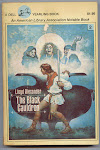
The Black Cauldron, by Lloyd Alexander
The Dead Zone, by Stephen King
The Education of Little Tree, by Forrest Carter

*

I think it's time for another pot roast, only this time not so spicy. And some rice instead of cornbread. Or maybe both.

Sunday, December 11, 2011

"Anonymous"

I recently read a comprehensive review of the movie "Anonymous," and now I want to see it. Apparently, it either alleges or hints at many of the things I believe to be true about the real Shakespeare, including the most important "fact."

A few nights ago, I watched "Neverland" on TV, and that Ifans guy played Hook. He looks like a good choice to play Oxford in "Anonymous."

So, my plan is to see the movie, then write a paper and add a string of references from my 50-odd years of studying Shakespeare. And then I want to see if the Leeds Arts Council will schedule me a program time to read my paper to an audience. That probably can't happen until next season, so maybe I should negotiate the time, before I start writing the paper.

This idea is part of an appeal by the Oxford Shakespeare Society, for members to "educate" the public on the identity  question, and to explain some points in the movie. I received their letter yesterday, and it commented favorably on the movie, and put the presentation idea into my head.

Thursday, November 19, 2009

"Poor wounded name!..."

This afternoon on the way to the "library," I picked up the first book I saw, Tess of the D'Urbervilles, and read the first chapter. All my life I have put off reading this book. I've read The Mayor of Casterbridge and Jude the Obscure, and I once saw a beautiful movie based on Far From the Madding Crowd. I should have read Tess first, but for a while I was saving it for a future treat, and then after reading Jude, I decided I had had all the Thomas Hardy I could take.

Now I am so captivated by Tess, the book, that I can't do anything industrious. The next day or so will be spent among those pages. A map in the front of the old book shows me that "Wessex," the setting, is southwest in England, almost Cornwall, an area with which I made myself as well acquainted as possible in my short time there, in the year 1997. This cures my impression that "Wessex" was somewhere north near Scotland or Hadrian's Wall. I've always tended towards ignorance in geography. But I loved Bristol and the Channel, and Bath, Lynton, Tintagel, Barnstable. Stonehenge and Salisbury. Well, I didn't love Stonehenge, but I liked the old crooked-spired cathedral so much that I re-read Sarum.

If my sentences are somewhat scatterbrained, it's because I can't wait to get back to the book.

Monday, November 9, 2009

"Conscience doth make cowards..."

I had 2 book sales over the weekend. The last one is an old mass-market paperback, and it sold for $14.76. Last time I had a sale like that, I felt so bad about charging that much for an old paperback, I refunded the buyer's shipping charge. Well, I ain't a coward any more. She can read it and probably resell it for at least that much.

Sunday, November 1, 2009

"Once more into the breach..."

This morning I started writing another November novel. I didn't hook up with NaNoWriMo, and I intend for this to be a closet piece. It's about a certain family, including a marriage and a divorce, and it's purely for therapy. I knew I'd have to write it eventually before I could do anything else important. They say you have to write a million unsuccessful words before you learn enough to write something good. I expect I really have written at least half that much. Probably more. Have I learned anything? "Ahem," as they say. That's another word I hate--it really is a dictionary word.

I did get a few trick-or-treaters last night, and they were all little kids. I don't like it when groups of teenagers storm the porch.

Friday, October 23, 2009

Poems I Know By Heart

Shakespeare's Sonnets tell the story of his life.
#76
Why is my verse so barren of new pride,
So far from variation or quick change?
Why, with the time, do I not glance aside
To new-found methods and to compounds strange?
Why write I still all one, ever the same,
And keep invention in a noted weed,
That every word doth almost tell my name,
Showing their birth, and where they did proceed?
O know, sweet love, I always write of you,
And you and love are still my argument;
So all my best is dressing old words new,
Spending again what is already spent;
For as the sun is daily new and old,
So is my love, still telling what is told.

#94
(I don't know this one by heart, but it tells his name. It's the only one of 154 sonnets that contains all the letters of his name in order--his usual signature. All the letters of his first name are counted from the left; all the letters of his last name are counted from the right. I presented this at an Oxford Shakespeare Society convention in Atlanta or Washington DC, I forget which. The poem doesn't make much sense, except that it tells his name.) Drawing by me, from a portrait of the Earl of Oxford.

ThEy that have power to hurt and will do none,
That Do not do the thing they most do show,
Who moving others, are themselves as stone,
Unmoved, cold, And to temptation slow;
They Rightly do inherit Heaven's graces,
AnD husband nature's riches from expense;
They are the lords and Owners of their faces,
Others but stewards of their eXcellence;
The summer's flower is to the summer sweEt
Though to itself it only live aNd die;
But if that flower with base inFection meet,
The basest weed Outbraves his dignity:
For sweetest things turn sourest by theiR deeds:
Lilies that fester smell far worse than weeDs.

Friday, July 17, 2009

"The lunatic, the lover and the poet..."

Through my sister Susan's blog, I find that the Charming Girls Quilt Club members have been tagged to answer the following questions, which will give us an extra entry in this month's prize drawing. So here are my answers.


1. My favorite fabric: I'm not familiar with many brands and designers, except that when I really love a fabric, it usually turns out to be from Cranston.

2. The pattern I'm most looking forward to finishing is my patchwork interpretation of an antique appliqued leaf quilt. The original, called "Halcyon Days," is featured in Quilts for All Seasons, a book compiled by my sister Susan, edited by Patricia Wilens, and published by Oxmoor House in 1993. My quilt is almost finished, just lacking one corner quilted and the edges bound. I think this will be my UFO for August.


3. The food that is my weakness is currently Ball Park franks.

4. If I knew I couldn't fail, i.e., that it would be worth reading, I would write another novel.

5. The best "life advice" I know is "love God and do what you will" (so said St. Augustine). The premise being that if you love God, you'll try very hard not to do anything to offend Him.


I have great difficulty accessing Charming Chatter/Charming Girls. I spend about five minutes just getting into the site, then get confused about where to post, and getting back to the main page takes another five or so. It's probably the fault of my computer having too many encumbrances and not enough memory left, I don't know. But I wish Kelly and some of the members would visit Sourwood Mountain to say hi and to check my progress on the Una quilt.


I've been sewing since 7:00 this morning, and am just about ready to start on the border of the quilt top. So I do expect to have it finished by the end of the month.

*

My sewing machine is currently situated in the living room, adjacent to the TV cabinet. This more or less slows down the sewing, but keeps me entertained. I just watched "A Midsummer Night's Dream" on TCM. This is one of the most delightful films I've ever seen. It was made in 1935, and I've seen it maybe a dozen times; I first found it in a video rental place about 1985. It's a charming and rather spooky production of Shakespeare's play; if it had been filmed in color, it probably wouldn't be spooky, but it's all black and gray. Victor Jory plays Oberon, the fairy king. James Cagney and Joe E. Brown are the chief and funniest of the players who produce "Pyramis and Thisbe," the play within the play. Dick Powell and Olivia De Havilland are the main love interest, and little bitty Mickey Rooney is the craziest Robin Goodfellow imaginable. Some of the theme music is suspiciously similar to that of "The Wizard of Oz" film.

AMND is at least as good as The Wizard. It's mostly populated by little people and fairies, and everybody can fly except the humans. The caption of this post is from the play; it's the (human) king's statement of those who have the most vivid imagination.

Saturday, April 18, 2009

How Like a Winter

My poem "Letter From the Country" (page 23 of OME, posted April 13th), was inspired by a Shakespeare sonnet:

XCVII.

How like a winter hath my absence been
From thee, the pleasure of the fleeting year!
What freezings have I felt, what dark days seen,
What old December's bareness everywhere!
And yet, this time remov'd was summer's time,
The teeming autumn, big with rich increase,
Bearing the wanton burden of the prime
Like widow'd wombs after their lord's decease;
Yet this abundant issue seem'd to me
But hope of orphans, and unfather'd fruit;
For summer and his pleasures wait on thee,
And, thou away, the very birds are mute;
Or, if they sing, 't is with so dull a cheer,
That leaves look pale, dreading the winter's near.

which is one of at least a dozen that I know by heart. "What potions have I drunk of Siren tears,/ Distill'd from limbecks foul as hell within!" Reading Shakespeare's sonnets can be an education in English literature, if one studies them enough to know what they say, and what they mean.

"When in disgrace with fortune and men's eyes,
I all alone beweep my outcast state,
And trouble deaf Heaven with my bootless cries,
And look upon myself, and curse my fate;...
Wishing me like to one more rich in hope,
Featured like him, like him with friends possessed;
Desiring this man's art, and that man's scope;
With what I most enjoyed, contented least--
Yet in these thoughts, myself almost despising,
Haply I think on thee; and then my state
Like to the lark at break of day, arising
From sullen earth, sings hymns at Heaven's gate;
For thy sweet love remember'd, such wealth brings,
That then I scorn to change my state with kings."

I know of no rougher magic.

***

My poem today from OME is "People-Watching," on page 18:

People-Watching
Don’t you remember me?
It’s rude, you know, no matter what the reason,
to tuck in your chin and hurry by
and cut me
dead.

In Salem once
we piled the rocks as high as we could reach,
and never heard a cry or groan.
Wasn’t that you?

When we were moving stones for old Ramses,
someone in the quarry bumped my arm,
causing me to drop
a load on him, and I believe
he had your face.

And you—remember: when the Sirens sang,
and we bound each other to the mast,
I could have tied slip knots, and where
would you be now?

Old antagonisms don’t excuse
your corner-eyed,
hesitating glances,
as if you never saw me
in your lives.

Come, don’t hold grudges!
If I broke your bones, why,
that’s how these emporia,
these monuments and pyramids
get built.


Page 18 (copyright 2001 Joanne Ramey Cage)
2nd prize, State contest, 1995.

Monday, November 3, 2008

The Search for Shakespeare

Hide Fox and All After

In the second scene of Act 4 [of Hamlet], we find Hamlet alone in a room in Elsinore, where he's discovered by Rosencrantz and Guildenstern. They have been sent to bring him to the King who's just been informed of the death of Polonius. After taunting them with their servility, Hamlet agrees to go with them, and, as they exit together, he mutters "Hide fox and all after." Footnotes tell us what we might have guessed, that this is the name of a children's game, the one we know today as Hide and Go Seek.

Why does Hamlet say this? What does he mean? He isn't saying it to his former schoolmates, nor to the audience. They won't know what he means any more than we do. From this point on Hamlet talks in riddles a great deal of the time.

In Hide and Go Seek the child who is "it" plays the role of a hunted animal, a fox if you will, who is sought by the dogs, the other children. To evade the dogs the fox must be silent and crafty. When one of the hunters tracks him down, the hunter becomes the hunted, becomes the fox, becomes "it." This is only a game, of course, so the role of the fox is more glamorous than just being a dog, thus there is competition to be "it." To be the best dog, the one who finds the fox the quickest, then to be the best fox, the one who can evade the dogs for the longest time--is the motivating force that drives the game. Hamlet is a prince, born to rule. Refusing to see himself as a victim, he finds a way to cast himself as a winner--in his own mind at least--one who can "outfox" the dogs.

Hamlet is no longer a child, but until now he has lived a pampered existence. Blissfully unaware of the murderous animal energies that drive the politics of his father's court, he has, like Prospero, spent his life immersed in books and things of the mind. It has taken his father's murder to awaken him to the realities of power politics. Unwilling to believe the ghost without strong evidence of his uncle's guilt, he sets a trap, a play, to determine the truth. This works, yet it also puts him in serious jeopardy.

Once Claudius knows that he knows, Hamlet, formerly just an irritation, has become a deadly threat. Further, by killing Polonius, Hamlet has given his uncle a legitimate reason to get rid of him. Suddenly, for the first time in his life, he needs to get the hell out of his intellectual ivory tower and engage on the level of animal energies with all his wits about him. Knowing how fear can paralyze action, to encourage himself he summons up a game from his childhood, so that he can act freely, with the elan of a child at play. Thus it is to himself that he speaks when he murmurs "Hide fox, and all after."

Hamlet, Prince of Denmark is full of clues about the author, but these have led nowhere since there's nothing to be found in Stratford. There was no prince in Stratford, living in an ivory tower. This author felt safe in childhood, and what does he do as an adult? How does he deal with the cruel realities of life? He plays. He plays the lute, and he writes plays, in which, as in children's games, the victims rise when the curtain falls and the show is over to play again the following day in a world of make believe. This author was a man who felt powerless in the real world, but who found his strength and power in the world of the theater, the world of play.

The fox is safe as long as he remains hidden. There is nowhere Hamlet can hide his physical self from the King and his henchmen. But what he can hide are his intentions. From now on, Hamlet, who is of an open disposition by nature and inclined to reveal his feelings, hides them behind a mask of foolery.

Like Hamlet, his author too hides himself behind a mask--the one we call "Shakespeare."

By Stephanie Hopkins Hughes, The Shakespeare Oxford Newsletter, V. 43:#1, Winter 2007, pp 1,3.

Friday, August 29, 2008

Julius Caesar - 1953 movie

I had my to-do list all ready about 10:00, got up to start a load of laundry, and noticed on TV guide channel that Julius Caesar was on the Turner channel. I flipped it on, and for the next hour and a half I stood transfixed in front of the TV. I thought I had seen this movie before, but I must have been mistaken.

Since then I've spent nearly an hour fighting the pop-ups on my computer, which are determined to sell me a spyware system. Also sold another book, which makes three I've got to go pack and mail.

Julius Caesar is Brutus's play, although in this movie, Brando's brief appearances as Mark Antony may seem to be the highlights. James Mason excels as Brutus, John Gielgud is Cassius and Louis Calhern a rather moth-eaten Caesar.

Brutus's excuse or self-justification for killing Caesar was fear that Caesar would become emperor, thus ending the Roman republic. It was sort of like, "If you had known in the 1930s what Hitler would do, and if you had the chance, would you kill him?" But by killing Caesar, the conspirators ensured what they most feared: Octavian and Antony took over, and when Octavian had got rid of Antony, he made himself emperor (Augustus Caesar), and goodbye Republic.


Added at 5:45 p.m.: They ended the movie with Antony's speech, "This was the noblest Roman of them all" and left off his final comment: "let's away, /And part the glories [divide the spoils] of this happy day." Otherwise, as far as I could tell without the book, it was true to Shakespeare's play. So, the best writer of all wrote the original screenplay for one of the best movies of all.

Sunday, August 3, 2008

"Use it up, Wear it out, Make it do, Or..."

...take it to the thrift store. Which is what I'm going to do with a large proportion of my clothing, which I've been saving, over the past decade or so, until I regain my girlish figure. This action will leave me with four pairs of jeans, maybe a dozen T shirts, and several dresses and winter garments that I bought when I thought I was rich, but have never worn. So there.

The Spy, by James Fenimore Cooper, is a book that you really ought to read, whoever you are. It's the first book in a long time that has made me cry out loud. But don't worry; the part that makes you weep comes very late, like the last page or so.

Last Thursday, Mrs. Barbara asked me to substitute for her as hostess for the August 8th book club meeting, which I agreed to do. I'm really looking forward to it. Yesterday, I finished reading the book she had chosen, very good short stories by an Alabamian.

Sometimes I wish I could get back all the books I have sold, and all those that I have lost or read to pieces over my lifetime, and just make a big pile of them and sit down in the middle of it. Emily Dickinson said, "There is no frigate like a book/ to take us lands away." I could tell her, there is no community or congregation like a great multitude of books to enable us to endure and deal with life on this indescribable planet, and hope to leave it with a few human faculties intact.

[Shakespeare reference on Jed's Comment]

Saturday, June 16, 2007

SELLING Books? Who'd a thought it?

Yesterday I had two sales: Calling the Circle: The First and Future Culture, and Baudelaire: Poems. The first one I found in the basement, read part of it, cleaned it up to near-new appearance. I bought the Baudelaire a few years ago, read it and remember more of it than I really care to.

Today I sold Shakespeare: The Invention of the Human, by Harold Bloom, a great big fat hardcover book. I have two copies of this, and I can't remember where the second one came from. Bloom is so pigheaded he won't admit there's any doubt about the authorship, but he writes so engagingly that it doesn't seem to matter. Reminds me more of Lily B. Campbell than Bradley. But like Bradley in clinging to illogical statements like ivy to a tree.

I didn't go to the book club meeting yesterday. The library didn't get the book (Bel Canto) for me until Thursday afternoon, although I requested it at least two weeks ago, nearer three. Anyway, I couldn't quit reading it, meeting or not. I didn't take time to call Mable or anybody, and now I feel like I've committed a crime. Misdemeanor, at least.

I've also received a couple more feedbacks from customers in the past few days. Still at 100%. Holding my breath, hoping it will last.