
Showing posts with label poets. Show all posts

Wednesday, April 10, 2019

Becoming, by Michelle Obama****

My sweet Sister Susie gave me this book for my birthday. It is extremely well-written, easy to read. I enjoyed it very much. The First Lady certainly had experiences of hard work to achieve her goals, as well as family tragedies like most other people. As she evidently has one of the best husbands in the world, and two lovely children, one wishes her a continued long, blessed and happy life.

Today in the mail I received a brand new copy of A Canticle for Leibowits, (copyright 1959), as I sold my old copy back when I was selling on Amazon. I have received so many free books lately through Amazon and Amex, that I almost feel like a cheapskate. But I guess they are the results of all the books I bought and paid for, before I paid any attention to the information about "points"

An old book that I've read most of recently is Black Elk Speaks, by John G. Neihardt. I've never read this whole book, frankly because it is so sad to read. This time around, I wrote a poem, "Black Elk Speaks of the Death of Crazy Horse," which I entered in the National Federation of State Poetry Societies (NFSPS) 2019 Founders' Award contest. I also read it at our most recent poetry group meeting.

Also at the poetry group meeting, Ramey read a really wonderful poem about birds, which I think was new. And other members contributed good poems. It was good to see Spurgeon again; he never reads, but just listens.

"Just" reminded me of something that struck me while watching "Gunsmoke" on TV. I don't  know what some of those old shows would have done without the words "just" and "well." Almost every sentence that either Matt Dillon or Doc Adams spoke started with "Well," and when they started saying "just," it seems they couldn't quit.


Lately I get a "ghost" on every photo that I post on the blog. It's a mystery.

Friday, January 22, 2016

Poem for the Day

To a Snowflake
 
By Francis Thompson, 1891
 
WHAT heart could have thought you? --
Past our devisal
(O filigree petal!)
Fashioned so purely,
Fragilely, surely,
From what Paradisal
Imagineless metal,
Too costly for cost?
Who hammered you, wrought you,
From argentine vapor? --
"God was my shaper.
Passing surmisal,
He hammered, He wrought me,
From curled silver vapor,
To lust of His mind --
Thou could'st not have thought me!
So purely, so palely,
Tinily, surely,
Mightily, frailly,
Insculped and embossed,
With His hammer of wind,
And His graver of frost."

*

3:00 p.m.: I've been standing at my kitchen's east window, putting things in the dishwasher and watching little snowflakes fall.
 

Saturday, September 13, 2014

Probably the Two Greatest Poets of the Twentieth Century


I often think of W.H. Auden
and Ezra Pound.

About Pound, 'Hemingway wrote of him in 1925: "He defends [his friends] when they are attacked, he gets them into magazines and out of jail. ... He introduces them to wealthy women. He gets publishers to take their books. He sits up all night with them when they claim to be dying ... he advances them hospital expenses and dissuades them from suicide."'

He mentored, nurtured and influenced other writers until WWII when, like a lot of other folks, he went sort of around-the-bend crazy. I believe he wound up on the right side of the ticket, ruined nonetheless. But his poems are probably immortal.

Of Auden, what can anyone say? "Musee des Beaux Arts." "September 1, 1939." "Time Will Say Nothing But I Told You So." "Herman Melville."

Tuesday, August 5, 2014

New Book in the Mail

In today's mail I received a copy of the Georgia Poetry Society's 2014 Anthology. (I wish our ASPS Sampler could be this nice.) Couldn't figure why I got it, because it doesn't have a poem by me in it. But found that it has the three winning poems in the contest that I judged this spring, "The Mnemosyne Award," plus a biographical blurb of me. These are three of the most beautiful previously unpublished poems I've seen in a long time. Wish I could copy them in my blog, but I don't know if that's permitted or not.

The first place one is by a gentleman determined to keep on writing, no matter what happens.

The second place poem is like a fairy thing out of A Midsummer Night's Dream.

The third place winner is probably my favorite, though not as technically impressive as the first two. It's by a lady promising to give her companion any three extravagant things he wants in exchange for two tiny paintings and a Nevada sunset.
*
I've been thinking of a book consisting of selections from my blog. Like "Seven Years of Something-or-Other." The publishing concern "She Writes" is sponsoring a contest for a book of memoirs. I wonder if blog posts could be called memoirs.

Sunday, November 3, 2013

It's Later Than You Think

I thought I was getting up early this morning; looked at the computer clock and it said 10:30, so I thought it was only nine-thirty, the western hemisphere having fallen back an hour. But no,--these smart machines these days!--the computer had automatically adjusted.

As my friend Christy Cobern used to say, I'm not eating today. For the past week, I've been eating like a hog, and I've gained five pounds. Probably nerves over having to go the TKC tomorrow for two appointments. I never seem to manage to see my doctor when I'm feeling skinny so he'll feel sorry for me instead of fussing at me for smoking.

On my computer desktop there's a poetry manuscript that I thought I had sent to the Poets & Writers Maureen Egen competition, to win a trip to New York City and another trip to Montana. The deadline is December first, so to make sure, I started checking my records and find that I never sent it. At least, I can't find where I ever sent it. Probably because when I first made it up, my printer cartridge was too low to print the required five copies. It'll be a pretty hefty mailing charge, but at least there's no entry fee. Sometimes I wonder, counting contest entry fees and mailing expense, have I really made any money with my writing. One of my favorite poets, Judson Jerome, in his advanced age said that he had made approximately $2,000.00 from writing. I may have done a tenth of that, everything considered. But maybe I've still got a way to go.

Wednesday, October 16, 2013

Chunks Of Prose: Muddy Waters

Leaves, By Me
You can tell people all kinds of truths, except the truth about themselves or their offspring, or their works. The truth about my oeuvre is that it's all poor imitation, except for this colored drawing,

this sketch,


this sky painting:


and a few of what I stubbornly call poems.

Until 1994 when the Alabama State Poetry Society was revealed to me, I didn't presume to call my verse "poetry." The "poet," Mr. Ralph H., chided me for saying that I wrote verse instead of poetry. Upon acquaintance with the output of the ASPS membership (and their contemporaries around the country), I understood why he said that. What most of them wrote might at a long stretch of the definition have been poetry, but it sure as H. wasn't verse. We all long to belong, so I settled in, consenting to be called a poet.

What happened was that in the late nineteenth and early twentieth centuries, some famous poets started occasionally dispensing with obvious forms, end rhyme, and a few other traditional elements of poetry. The world at large took this to mean that all the bonds were loosened and anything one chooses to write down and call a poem is one. Maybe they're right. I don't know. I DO know, but who am I to judge? The waters are muddied.

Tuesday, August 27, 2013

Gilding the Lily

 
Ars Poetica by Archibald Macleish (1892-1982)


A poem should be palpable and mute
As a globed fruit,
 
Dumb
As old medallions to the thumb,

Silent as the sleeve-worn stone
Of casement ledges where the moss has grown—

A poem should be wordless   
As the flight of birds.

                         *               

A poem should be motionless in time   
As the moon climbs,

Leaving, as the moon releases
Twig by twig the night-entangled trees,

Leaving, as the moon behind the winter leaves,   
Memory by memory the mind—

A poem should be motionless in time   
As the moon climbs.

                         *               

A poem should be equal to:
Not true.

For all the history of grief
An empty doorway and a maple leaf.

For love
The leaning grasses and two lights above the sea—
 
A poem should not mean   
But be.
 
***
What brought that on? Trying to rewrite some of my poems that don't quite work. Very hard to do, as in its own way, each one seems complete, and dares me to mess with it.
 
***
 
Some kind of plantain? I haven't found it in the Ala. Wildflowers book.

Thursday, April 4, 2013

"Bright star, would I were steadfast as thou art. . ."

The poet John Keats, whose parents died when he was a child, was heir to two small fortunes. However, his adult life was spent in grinding poverty. He borrowed money from friends, just to be able to live. He died of tuberculosis at age 25, probably contracted while caring for his brother who died of the disease.

After his mother died, Keats lived with his grandmother, who appointed two men to be his guardians and mentors. At least one of these men knew that two of Keats's deceased relatives had left him substantial amounts of money, to be available when he reached the age of 21. However, the guardian(s) never told him, or anyone close to him, of the bequests, and no inquiries were made about the money.

He was the greatest of the late Romantic poets, achieving that stature in writing poetry for approximately five years, and dying at the youngest age of them all. Shelley lived to age 30 and Byron to 36.

Keats wrote, "Oh, for ten years!" to write down all that was in his mind, but he only got five.

It's amazing to contemplate how prolific these poets were, in spite of various hardships, troubles, and short lives. Byron wrote book-length poems, and several plays in verse. Shelley is regarded by many as the greatest poet, but in my opinion his works are marred by archaic language and a certain distance between the poet and the emotions that the works should evoke.

Many of Byron's poems are marred, of course, by facileness, flippancy and haste.

Saturday, January 26, 2013

FAVORITES

My favorite writers:

William Shakespeare, poet and playwright
Charles Dickens, novelist
Mark Twain, novelist, memoirist and travel writer
Rudyard Kipling, poet and fiction writer
Robert Browning, poet
W. Somerset Maugham, novelist, playwright and short story writer
Lloyd Alexander, novelist (children's and young adults')
Lewis Carroll
Robert Frost, poet
Shirley Jackson, novelist


*

Novels I've read the most times:

Gone With the Wind, by Margaret Mitchell
China Court, by Rumer Godden
A Tale of Two Cities, by Charles Dickens
The Razor's Edge, by Somerset Maugham
Random Harvest, by James Hilton
The Haunting of Hill House, by Shirley Jackson
Rebecca, by Daphne duMaurier
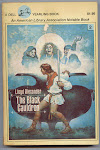
The Black Cauldron, by Lloyd Alexander
The Dead Zone, by Stephen King
The Education of Little Tree, by Forrest Carter

*

I think it's time for another pot roast, only this time not so spicy. And some rice instead of cornbread. Or maybe both.

Tuesday, September 25, 2012

Part Of a Real Poem

From "Ode To a Nightingale," by John Keats:

". . . Darkling I listen; and, for many a time
I have been half in love with easeful Death,
Call'd him soft names in many a mused rhyme,
To take into the air my quiet breath;
Now more than ever seems it rich to die,
To cease upon the midnight with no pain,
While thou art pouring forth thy soul abroad
In such an ecstasy!
Still wouldst thou sing, and I have ears in vain -
To thy high requiem become a sod.

"Thou wast not born for death, immortal Bird!
No hungry generations tread thee down;
The voice I hear this passing night was heard
In ancient days by emperor and clown:
Perhaps the self-same song that found a path
Through the sad heart of Ruth, when, sick for home,
She stood in tears amid the alien corn;
The same that oft-times hath
Charm'd magic casements, opening on the foam
Of perilous seas, in faery lands forlorn."


Keats had tuberculosis and knew he was dying. He wrote his "Five Great Odes" in 1819 and died in 1821 at age 25.

 'Severn—I—lift me up—I am dying—I shall die easy; don't be frightened—be firm, and thank God it has come.'

John Keats
1795-1821
*

If surpassing this poem is possible, Percy Bysshe Shelley surpassed it with his "Ode To the West Wind." These guys wrote 200 years ago, when English was not yet a dead language.

Saturday, October 30, 2010

Titanic

I know what I'm going to be doing at seven o'clock this evening, Lord willing--watching "Titanic" for the umpteenth time. This one is the James Cameron film. I think I've seen just about every movie that has been made about that disaster; one starred Peter Gallagher and Catherine Zeta Jones. But this one with DiCaprio and Kate Winslett is my favorite.
*
Well, this was the big day, for me and Ramey both, as well as other Alabama poets. Jed came over and went to the State Poetry Society fall meeting with us. The luncheon was held at the beautiul Newton-Davis House in Odenville. The food and service were superb, and we had a large crowd, compared to attendance at some of the meetings in recent years.

Ramey won first prize in the "Parody" contest with a great take-off on a poem by Emily Dickinson.

I won two honorable mentions for little poems that I didn't expect would win anything. My "Mother Teresa" poem (on my blog August 30, 2010) won one of 4 prizes that were not designated as 1st, 2nd, etc. (Note: I find later that the winners were assigned places; mine won second place. The contest was named "When the Saints Go Marching In" and Wayne D. of Huntsville won first place with a really fine poem.)

The poem about the Madonna painting by Andrea del Sarto (see blog, September 27) won first prize in that contest. Then I nearly fainted, and did shed a tear or two reading it, when my poem "Ode: On Grief" won the "grand prize," first place in the Alabama State Poetry Society Fall 2010 Award.

Poet Jerri H. (a girl) of Huntsville won the "Performance Poem" award. Hers was a description of what it's like to be a poet--deep, humorous but also dramatic, and very true.

It was a delightful day--or would have been, if one's nerves hadn't been keyed up like banjo strings. Ramey had a book signing (of Sweet Music on Moonlight Ridge) after the meeting, at the new shopping mall; and shortly after we got home, Jed had to make tracks back to Atlanta--he's flying to Houston, Texas tomorrow.

I'm still going around in circles, but now I'm going to settle down and watch "Titanic."

Tuesday, July 27, 2010

An Evening Out

Last night I went to the poetry reading at the Arts Council building. (I'm making a resolution to go to every meeting.) The group meets on the last Monday of every-other month. When I attend, I find myself wishing we met every month.

I did get there on time yesterday, but the group had already arrived and arranged chairs in the lobby--which was much more congenial than a table in the meeting room. There were Joan and Frank, Cookie, Sherry, Joe W., and a gentleman named DeWitt who is something at one of the schools, I didn't catch all the details. Cookie read her "Cats" poem, and Joan also had a poem about how she and Frank acquired a cat ironically named Angel. Sherry read a reminiscence, and Joe shared a poem about a very moving personal experience from his childhood, and another one about the phenomenon of aging. Everyone read several pieces; Frank had a group of very brief verses, plus a couple of longer poems. I guess Mr. DeWitt (actually, that's his first name) took the prize for longest poem; his was an analogy about the Gulf of Mexico, very insightful.

I read "Exodus," "Splendor Before a Storm," "The Muse Contemplates Departure," and "Jane Austen Never Married." Everyone had very kind comments. They even understood "Departure," maybe because I took the trouble to utter an explanatory sentence before I read it. It's about the environment, earth, rather than exclusively about poetry. They made me read the last part of "Jane Austen" twice:

But you almost found him, didn't you, once or twice?
You were right in his path once, almost, weren't you?
You caught a glimpse of his white horse through the trees,
A sunbeam flashed on his armor, and you saw
The plume on his helmet disappear into the forest.

I had brought along a copy of Ramey's book, Sweet Music on Moonlight Ridge, for show-and-tell, in case anyone hadn't seen it. I think everyone except Cookie and DeWitt had read it. We discussed the book and its characters, and I told a little bit of background about life on the mountain. Everyone said to tell Ramey "hi" and congratulations.

A sad note was Gail W.'s absence. Joe said she'd had chemo in the past week, and it takes several days for her to get back to feeling well.
*
Happy Birthday to Ramey! She's about 21 today, give or take a few. She and I went to lunch Sunday to celebrate in advance, at Caney's Fork or Creek or Park, or something, I can't keep that name right in my muddled head.

Monday, May 31, 2010

Poems By Veterans

O Captain, my Captain! by Walt Whitman

O Captain, my Captain! our fearful trip is done;
The ship has weathered every rack, the prize we sought is won;
The port is near, the bells I hear, the people all exulting,
While follow eyes the steady keel, the vessel grim and daring;
But O heart! heart! heart!
O the bleeding drops of red,
Where on the deck my Captain lies,
Fallen cold and dead.

O Captain! my Captain! rise up and hear the bells;
Rise up--for you the flag is flung--for you the bugle trills;
For you bouquets and ribboned wreaths--for you the shores a-crowding;
For you they call, the swaying mass, their eager faces turning;
Here Captain! dear father!
This arm beneath your head;
It is some dream that on the deck,
You've fallen cold and dead.

My Captain does not answer, his lips are pale and still;
My father does not feel my arm, he has no pulse nor will;
The ship is anchored safe and sound, its voyage closed and done;
From fearful trip, the victor ship comes in with object won;
Exult, O shores, and ring, O bells!
But I, with mournful tread,
Walk the deck my Captain lies,
Fallen cold and dead.

[The Captain is Lincoln; the Trip is the War; the Ship is the Union.]

*

In Flanders Fields, by John McCrae

In Flanders fields the poppies blow
Between the crosses, row on row,
That mark our place, and in the sky
The larks, still bravely singing, fly
Scarce heard amid the guns below.

We are the Dead. Short days ago
We lived, felt dawn, saw sunset glow,
Loved, and were loved, and now we lie
In Flanders fields.

Take up our quarrel with the foe:
To you from failing hands we throw
The torch; be yours to hold it high.
If ye break faith with us who die
We shall not sleep, though poppies grow
In Flanders fields.

*


I Have a Rendezvous With Death, by Alan Seeger

I have a rendezvous with Death
At some disputed barricade,
When Spring comes back with rustling shade
And apple-blossoms fill the air--
I have a rendezvous with Death
When Spring brings back blue days and fair.

It may be he shall take my hand
And lead me into his dark land
And close my eyes and quench my breath--
It may be I shall pass him still.
I have a rendezvous with Death
On some scarred slope of battered hill,
When Spring comes round again this year
And the first meadow-flowers appear.

God knows 'twere better to be deep
Pillowed in silk and scented down,
Where love throbs out in blissful sleep,
Pulse nigh to pulse, and breath to breath,
Where hushed awakenings are dear. . .
But I've a rendezvous with Death
At midnight in some flaming town,
When Spring trips north again this year,
And I to my pledged word am true;
I shall not fail that rendezvous.

*

Does it make the hair rise on the back of your neck?

Tuesday, January 19, 2010

The Marianne Moore poem

Silence

My father used to say,
"Superior people never make long visits,
have to be shown Longfellow's grave
or the glass flowers at Harvard.
Self reliant like the cat --
that takes its prey to privacy,
the mouse's limp tail hanging like a shoelace from its mouth --
they sometimes enjoy solitude,
and can be robbed of speech
by speech which has delighted them.
The deepest feeling always shows itself in silence;
not in silence, but restraint."
Nor was he insincere in saying,
"Make my house your inn."
Inns are not residences.


Marianne Moore

*
The "father" in the poem was made-up; she never met her father, who was institutionalized shortly before her birth. Her grandfather died when she was a little girl. She and her mother moved around the country many times.
*
Ted Hughes, long-time Poet Laureate of England, was the husband of poet Sylvia Plath. Once, they met Marianne Moore, at which time Moore was an old person. Hughes later complained in a book that Moore was rude to Sylvia. This was in a book that he wrote after Sylvia's death; I read a couple by him, and don't remember which one contained this anecdote.
*
Hughes wrote a whole book of poems about Sylvia, after her death. A couple of generations have blamed him for her suicide, and the poems seemed to be both defensive and therapeutic. After reading about her life and personality, and reading both their poems, I was sort of surprised that both of them didn't commit suicide while they were married.

Saturday, January 16, 2010

Am I Losing It?

Heck, no. At least, I know what my problem is. Or was. I've sold two or more items on eBay, and I've been gnawing my gnails for >24 hours, wondering what to do next. Comes from getting mixed up with PayPal. I should have gotten a postal scale in the past month, but I didn't. I was wondering if somehow I could appeal to the Leeds P.O. to help me out. Anyway.

This morning I called my sister Suze to see if her pain is any better. She has an appointment with surgeons to see if her past back/neck surgery has anything to do with what she's going through now, and we pray it doesn't. I told her my problem with the mail, and turns out, she has a postal scale, so I'm going over there to borrow it. Maybe I'll learn the ropes on this eBay business. There's money there, if I can just move it to here.

Sold:


The stein hasn't closed yet, but I've got a good bid on it. I feel strange about getting rid of treasures. But I really don't think I'll ever think about them again after they're gone. That yellow vase has bothered me for 30 years or so. And I never liked the Roseville pot. I only like the stein because it reminds me of visiting Harvard and seeing the glass flowers, and Boston and seeing Longfellow's house and grave and all. I think Marianne Moore mentioned those things in a poem.


Monday, November 23, 2009

Wynken, Blynken, and Nod


By Eugene Field

Wynken, Blynken, and Nod one night
Sailed off in a wooden shoe--
Sailed on a river of crystal light
Into a sea of dew.
"Where are you going, and what do you wish?"
The old moon asked the three;
"We have come to fish for the herring fish
That live in this beautiful sea;
Nets of silver and gold have we!"
Said Wynken,
Blynken,
And Nod.
*
The old moon laughed and sang a song,
As they rocked in the wooden shoe,
And the wind that sped them all night long
Ruffled the waves of dew.
The little stars were the herring fish
That lived in that beautiful sea--
"Now cast your nets wherever you wish--
Never afeard are we!"
So cried the stars to the fishermen three:
Wynken,
Blynken,
And Nod.
*
All night long their nets they threw
To the stars in the twinkling foam--
Then down from the skies came the wooden shoe,
Bringing the fishermen home;
'Twas all so pretty a sail, it seemed
As if it could not be,
And some folks thought 'twas a dream they'd dreamed
Of sailing that beautiful sea--
But I shall name you the fishermen three:
Wynken,
Blynken,
And Nod.
*
Wynken and Blynken are two little eyes,
And Nod is a little head,
And the wooden shoe that sailed the skies
Is a wee one's trundle-bed.
So shut your eyes while Mother sings
Of wonderful sights that be,
And you shall see the beautiful things
As you rock in the misty sea
Where the old shoe rocked the fishermen three:
Wynken,
Blynken,
And Nod.

***

Babies from left: Peter Alexander (1-1/2 inch; antique), McLeod II (1960s), and Little Eustace (1980s). Their names are from one of my favorite books, China Court, by Rumer Godden.
[I made the high chair and the ruffled bassinet! And all the clothes.]

Friday, October 23, 2009

Poems I Know By Heart

Shakespeare's Sonnets tell the story of his life.
#76
Why is my verse so barren of new pride,
So far from variation or quick change?
Why, with the time, do I not glance aside
To new-found methods and to compounds strange?
Why write I still all one, ever the same,
And keep invention in a noted weed,
That every word doth almost tell my name,
Showing their birth, and where they did proceed?
O know, sweet love, I always write of you,
And you and love are still my argument;
So all my best is dressing old words new,
Spending again what is already spent;
For as the sun is daily new and old,
So is my love, still telling what is told.

#94
(I don't know this one by heart, but it tells his name. It's the only one of 154 sonnets that contains all the letters of his name in order--his usual signature. All the letters of his first name are counted from the left; all the letters of his last name are counted from the right. I presented this at an Oxford Shakespeare Society convention in Atlanta or Washington DC, I forget which. The poem doesn't make much sense, except that it tells his name.) Drawing by me, from a portrait of the Earl of Oxford.

ThEy that have power to hurt and will do none,
That Do not do the thing they most do show,
Who moving others, are themselves as stone,
Unmoved, cold, And to temptation slow;
They Rightly do inherit Heaven's graces,
AnD husband nature's riches from expense;
They are the lords and Owners of their faces,
Others but stewards of their eXcellence;
The summer's flower is to the summer sweEt
Though to itself it only live aNd die;
But if that flower with base inFection meet,
The basest weed Outbraves his dignity:
For sweetest things turn sourest by theiR deeds:
Lilies that fester smell far worse than weeDs.

Sunday, October 11, 2009

Soup for one or two

Nothing fancy. I just slivered some baby carrots in a casserole, added 1/2 cup of water and a pat of butter, and microwaved it for 10 minutes. Then I added a cup of Campbell's cream of chicken soup and a cup of water, stirred it up and added some black pepper and heated it again for about five minutes. I didn't eat crackers with mine, because they would have defeated the taste of the carrots. Mmmm, good supper last night.

I'm reading The Poems and Fairy Tales of Oscar Wilde. I love Oscar Wilde, and I think it's a shame the way he was treated in Great Britain. I'm glad he left there permanently when they let him out of prison. One of my favorite quotations from O.W. is, "It is what you read when you don't have to, that determines what you will be when you can't help it." It seems to be partly true, and completely free of his usual sarcasm or irony.


I know that I'm always starting projects and not finishing them, or planning projects and never beginning them. But this time, Mama means it! I'm going to start today making Christmas outfits for all my dolls, or as many as possible. I own about 50 or 60 (every time I count them I get a different number), so maybe I can dress at least half of them, the larger ones, before Christmas. I'm also planning to have snow for Christmas, one way or another.

This is my 1935 Madame Alexander "Baby Pinkie." She was born just a year after I was, but has aged much better. I'm thinking a christening gown for her, and a knitted or crocheted blankie.

Thursday, October 1, 2009

Earth my likeness


Walt Whitman was a wild soul. His love of wild nature and the sensual experiences of life are felt in everything he wrote. ...The beauty of Roderick MacIver's... watercolors creates a grand tribute to this sensitive soul.

As I have walk’d in Alabama my morning walk,
I have seen where the she-bird the mocking-bird sat
on her nest in the briers hatching her brood.

I have seen the he-bird also,
I have paus’d to hear him near at hand
inflating his throat and joyfully singing.

And while I paus’d it came to me that what
he really sang for was not there only,
or for his mate nor himself only, nor all sent back by the echoes,

But subtle, clandestine, away beyond,
a charge transmitted and gift occult for those being born.

— Walt Whitman


Picture and text from Heron Dance, A Pause for Beauty 321, Oct. 1, 2009
Painting: Autumn Portage, by Roderick MacIver
*
Added about 9:15 p.m. - Curiouser and Curiouser
On HGTV, there's a program called "If Walls Could Talk." I watched it last night, and part of it was very strange. The featured homeowners had bought a house formerly owned by astrologer Linda Goodman, in Cripple Creek, Colorado. The house still had all of Goodman's furniture and furnishings, drafts of all her manuscripts, personal possessions. Weird.
*
The couple who bought the house said that the reason the house was left "as is" and eventually put up for sale was that Linda disappeared. Wikipedia says she died in 1995 from complications of diabetes, but that she had a daughter who disappeared in 1973. I couldn't find any details online about her later life and the circumstances of her death, but apparently she was born in 1925.
*
When my children were teenagers, we enjoyed reading Linda Goodman's Sun Signs, and I have read (and own a copy of) Linda Goodman's Relationship Signs, published posthumously and edited by Crystal Bush. The latter book says that she died in 1995, that Crystal Bush and Carolyn Reynolds worked with Goodman until shortly before her death.
*
The whole house is decorated with the theme of Alice in Wonderland. It has stained glass windows with scenes from Alice, decks of cards with scenes from Alice on the backs, plates with Alice scenes (a la the Tenniel drawings). All the furniture in the house is antique, and a lot of the pieces are rather funny-looking antiques.
*
I don't believe that astrology can predict anything or "foretell the future." But the types of people born under the signs of the zodiac do seem to match the astrological descriptions.
*
Sometimes my blog won't leave spaces between paragraphs. I put asterisks between paragraphs when this is happening.

Tuesday, September 15, 2009

Re-Pinked

I'm putting the old pink damask back on my dining room chairs. That whole room is going to be slathered with pink and gold. I love the turquoise picture frames and Pat's possum picture, but they'll have to go somewhere else. The major problem is that I have a lot of pink fabrics and bric a brac, but none in the shades and textures that I want to use.


*******
Sad to learn of the passing of Patrick Swayze yesterday. The saddest part, to me, is that he had to linger and be sick, disfigured and tortured by the disease and the treatments, for more than a year. I always liked to leave a party while I was still having fun. Wouldn't death be kinder that way? Of course, it would, but we're not asked for our preferences.